
Moovs and Limo Anywhere run your vehicles. Tjati runs your business.
One login for your website, leads, CRM and marketing — built so AI answer engines quote you. Connected to the dispatch you already run.
Dispatch software runs the ride. Nothing runs the operator.
Sedans, SUVs, sprinters, party buses, tour and passenger coaches — if you run ten to a hundred vehicles, you are the most underserved operator in transportation. Moovs and Limo Anywhere are good at the ride. But the website is a template you bolt on — often a page builder with a dozen plugins and an “AI” button somebody added last quarter — the quote form is their widget in their styling, the CRM is a passenger list, the newsletter is a separate subscription, the social posts are somebody’s phone, and the reporting is a spreadsheet on Sunday night. Whether you run four sprinters or forty coaches, every one of those is a separate login and a separate bill — and you’re the one carrying data between them.
Tjati starts from the other end: the business first, then the vehicles. Everything a booker touches before and after the ride lives in one system, and dispatch plugs into it — yours today, ours when you want it.
Today · a dozen logins, you are the integration
Every arrow between these boxes is a person re-typing.
Dispatch
Limo Anywhere or Moovs
Website
a template, hosted elsewhere
Booking widget
their form, their styling
Web host + DNS
two more logins, two more bills
Passenger list
exported to a spreadsheet
Newsletter tool
separate list
Business email
confirmations and follow-ups by hand
Social accounts
four apps on somebody’s phone
Payments
processor portal, reconciled later
Reviews + listings
maps profile, review sites
Documents
contracts and driver files in a drive
Reporting
Sunday-night spreadsheet
On Tjati · one login, data speaks both ways
Two-way connection to Moovs, Limo Anywhere or whatever you run — bookings out, status back — or a dispatch install of your own.
Website + native quote forms
AEO-first
CRM · contacts, accounts, bookings
source-stamped
Content · newsletter · social · email
one desk
Reporting · partners · files · procedures
your brand
Custom-built from the ground up. Not a template on another vendor’s white label.
The One Big Thing · AEO first
When someone asks an AI “who does black-car service in Atlanta?”, your business should be the answer.
Search used to hand your customer ten blue links and let them choose. Answer engines — ChatGPT, Gemini, Perplexity, Google’s AI overviews — hand them one answer, and the operator who isn’t in it isn’t considered. The answer is assembled from pages a machine can read without guessing: structured questions and answers, a clear organisation, a clear service. That is answer-engine optimisation, and it is the first thing every site we build is designed for — before the photos, before the copy.
Shipped today on every page: FAQ, breadcrumb and organisation structured data, so your questions-and-answers, your service pages and your business identity are quotable verbatim. Article markup follows with the blog renderer — we’ll say when.
What happened to search while the template sites weren’t looking
A template site with a booking widget is built to win a click that, most of the time, no longer happens. A site built to be quoted wins the answer. Sources: SparkToro / Datos 2026, Pew Research, Ahrefs, Bain, Seer Interactive.
Four undeniable truths
01 · AI is built in, not bolted on. And it asks before it acts.
Most “AI-powered” tools are a page builder with a plugin stack and a chat button glued to the side. Here the assistant sits inside the editor: describe a change, it drafts the edits, you approve each one. It cannot publish by itself — not a setting, the construction. And the system checks its own work: every connection is watched, and if something drifts you are told before a customer is.
02 · One system, so the parts talk to each other.
A quote form becomes a contact. A post becomes a page and a newsletter draft. Subscribers sync back. Tasks sit on the same calendar as meetings. Not one password — no re-typing.
03 · It’s your data, and the permissions are real.
Scoped to your workspace and enforced on the server, not hidden in the interface. Roles you set and revoke. An append-only audit trail — including our own support access.
04 · The new labor cost is tokens. You should own the meter.
Every AI tool charges you for the “thinking” it does on your behalf — that is what a token is: a unit of AI work, like a kilowatt-hour. Most software hides that cost inside a subscription and marks it up. Tjati is bring-your-own-key: you hold the account with the AI provider, you see the meter, you pay wholesale. And it is provider-agnostic — if a better or cheaper model shows up next quarter, you switch. Nobody locks you to theirs.
Where this came from
We built this for ourselves first.
Last year we sold a World Cup Makeover: get your black-car site ready before the world lands in Atlanta. Halfway through building it we stopped. Search was turning into answer engines, AI was being glued onto every tool as a button, and the template stack we would have handed you was about to be obsolete. Shipping that would have meant selling you something we already knew was finished. So we missed the tournament on purpose and rebuilt from the ground up.
We built it for ourselves first — our own publication, our own agency, our own operator site, events.limo — and ran on it until it held. Tjati is that system, launching now. Every screen on this page is one we use every day; not a demo built for a sales call, a workspace we would be lost without.
The tournament proved the thesis: the operators who were in the answer got the rides. The next event calendar is already filling, and this time the system exists.
What Atlanta looked like, June 11 – July 15, 2026
Every one of those visitors needed a ride, and most of them asked their phone who to call. Sources: Atlanta Regional Commission, Axios Atlanta, Metro Atlanta Chamber.
What the operators without a system missed
Sources: host-city transport guides, Nebo Rides, Atlanta operator reports, June 2026.
The demo · events.limo
Watch one enquiry travel from the site to the pipeline — and back out as marketing
events.limo is a live luxury-transport operator built on Tjati. We use it as the demo because you can open it right now, fill the form, and we can show you where that lead lands. Nothing staged.
Share one enquiry
01 · Found
A booker lands on the page for the exact service. Corporate events, weddings, prom, airport, VIP, city tours, private-jet transfers, dedicated driver — nine landers, each written for that search and structured so an answer engine can quote it. 17 pages live; 7 articles anchored to the city’s event calendar.
02 · Captured — try it
Send one enquiry through and watch what one login does with it. This is the events.limo quote block in a coach operator’s brand, wired to the same automation that runs on the live site. What you would band-aid today: a booking widget, a spreadsheet you paste into, a newsletter tool you import to, and a follow-up you remember to send. Below, that’s one submit.
03 · Filed — no re-typing, source attached
The submission becomes a contact with the request and its source. Name, email, phone, message — plus the campaign, the ad click or the referral partner’s link that brought them, stamped at first touch with an intent score. Repeat enquiries stack on the same record. The booking becomes a deal in the pipeline with a stage, a value and a date. Scoped to your workspace and enforced on the server.
04 · Worked — and sent back out
Your console opens on what needs you today. New enquiries, tasks due, overdue follow-ups, subscribers, published pages — every number clicks through to the screen behind it. The booking hands to the dispatch you run today; status flows back to the deal. And it goes back out: the article that brought the booker in is scheduled to every social channel from the same console, the follow-up email fires from the CRM, and the leads that come back land in the same place, stamped with where they came from.
Send one enquiry through
This is the events.limo quote flow in a coach operator’s brand — the same automation that runs on the live site. Pick how the booker found you, fill it in, press the button, and we can show you exactly where this one lands.
Behind the site
The console your team logs into
This is a real workspace — the same one you get, in your brand. Dispatchers, drivers, bookkeeper, marketing each see what their role allows. Their marketing stack runs from here and pushes out to the channels they already use; yours will too, as part of the initial package.
The console
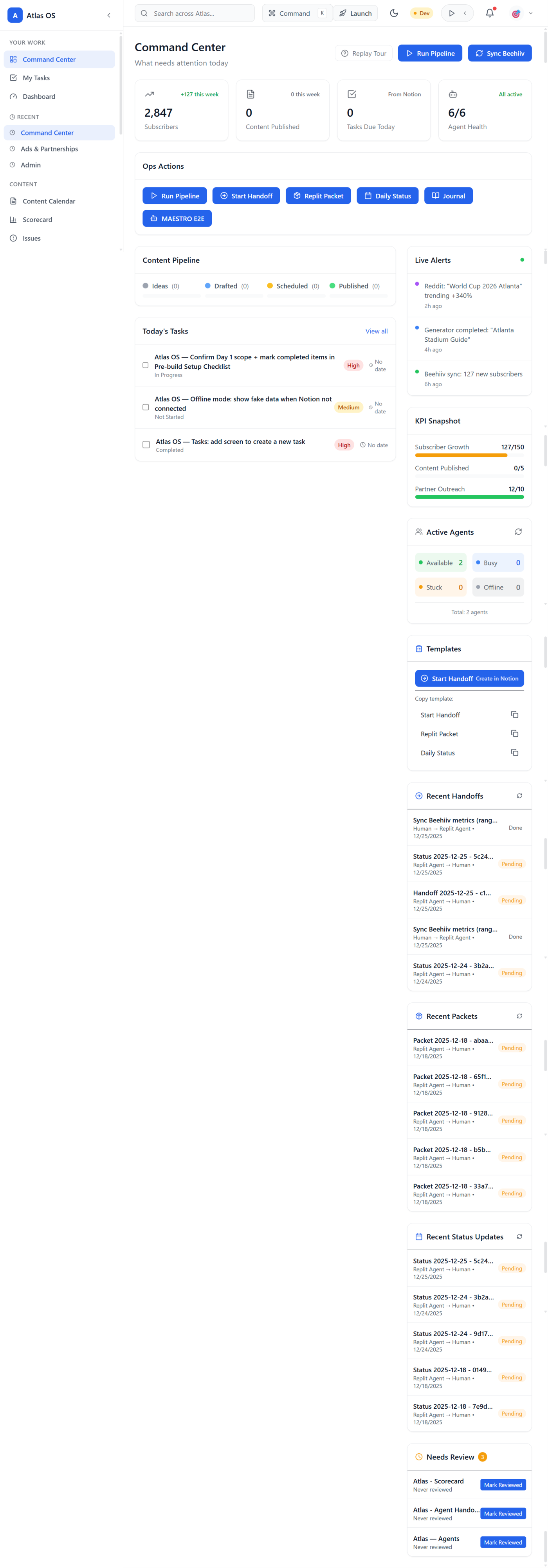
Command center
— subscribers, content published, tasks due, live alerts. The morning screen.
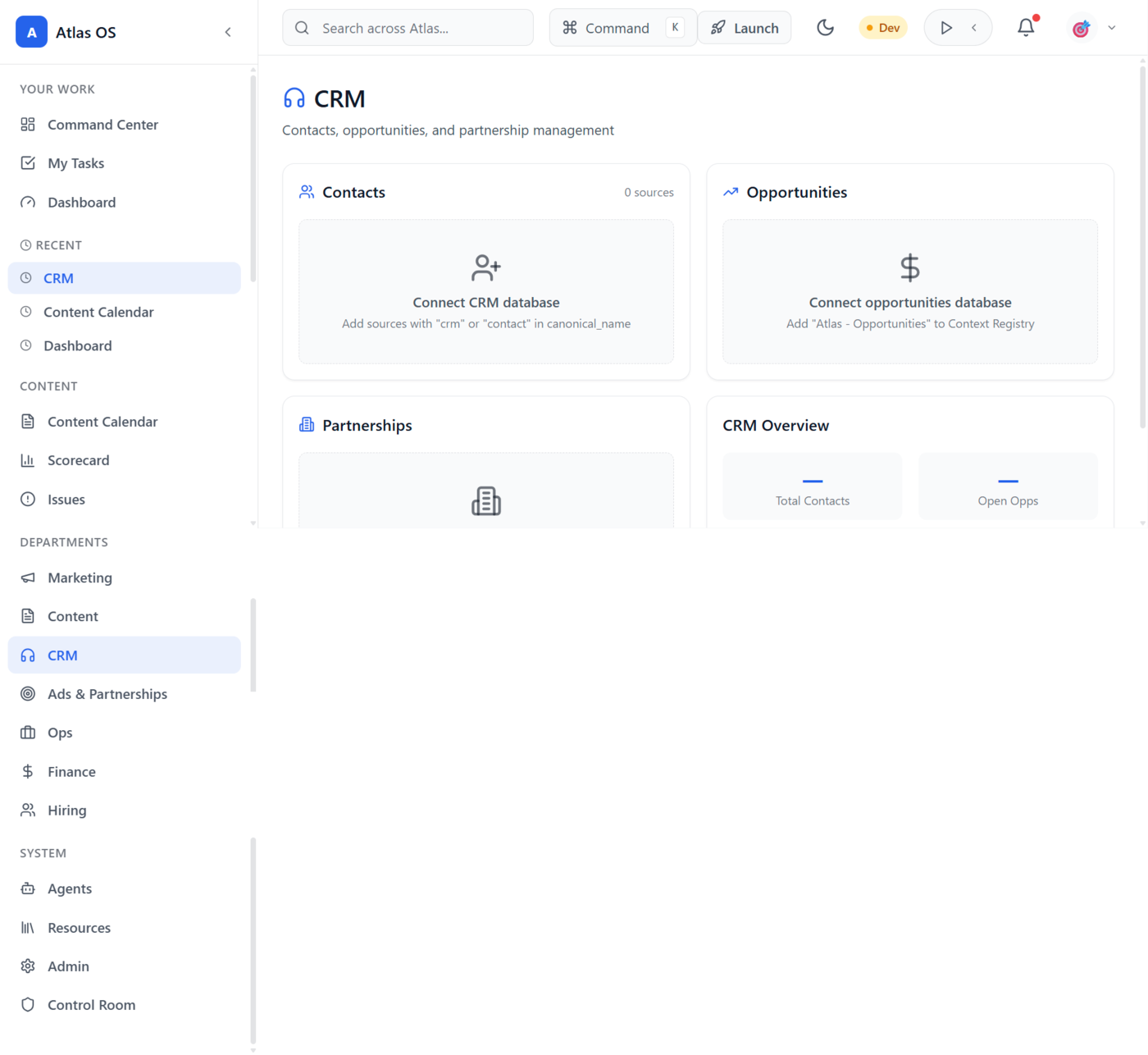
CRM
— passengers, corporate accounts, drivers and partners; every booking a deal with a stage and a value.
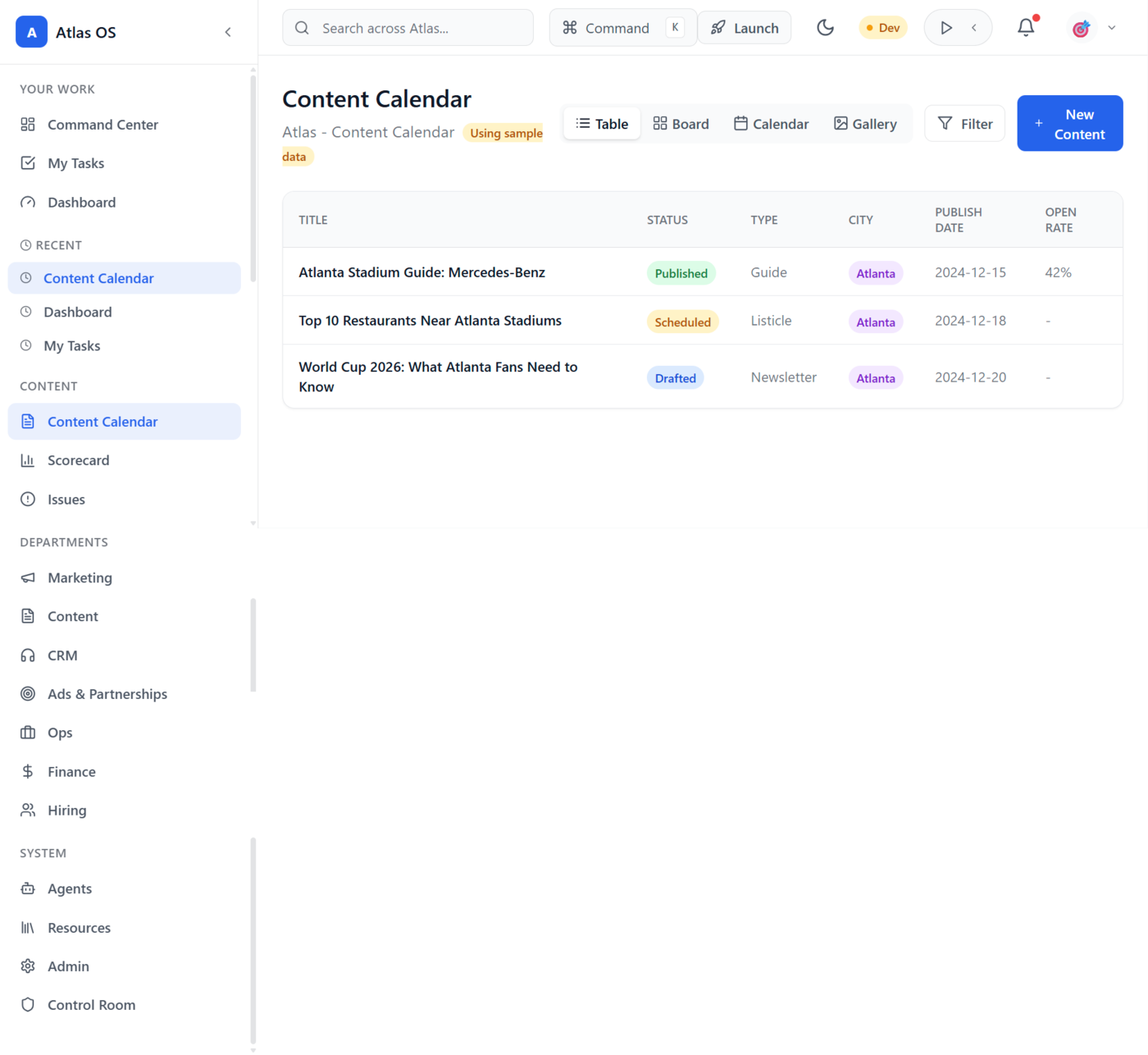
Content calendar
— event guides, articles, social posts and newsletter issues, drafted → scheduled → published, then pushed to wherever the operator distributes today.

Personal dashboard
— each team member’s own view: their tasks, their bookings, their day.
The whole stack, in one login
Every line carries its real status. Live = running for an operator today. In build = written and being verified. Coming = designed, not started.
Site & leads
Built to be quoted by answer engines and to turn a visit into a record.
AEO-first website with an editor · Live
A lander per service, FAQ / breadcrumb / organisation structured data on every page, a native quote form on each; describe a change and the assistant proposes it.
Forms that become contacts · Live
with the request attached; repeat enquiries stack on one record.
Source stamped on every lead · Live
Campaign, medium, ad click and partner code captured at first touch with an intent score, so you know which effort produced which booking.
Site traffic in the console · Coming
, next to the leads it produced — privacy-respecting, no third-party tag manager.
A/B testing · Coming
on service pages, measured by leads produced, not page views.
CRM & operations
Clients, drivers, partners and bookings in one directory — and the dispatch that runs them.
CRM built for bookings · Live
Passengers as contacts, corporate accounts as companies, bookings as deals with stages, values and dates; tasks and calendar on the same records.
Labels, roles and custom fields · Live
Per-operator pipeline stages, booking tags, contact roles; bounded custom fields — vehicle class, passenger count, event type — validated on save, filterable everywhere.
Team, roles, audit trail · Live
Invite, set each role, revoke later — enforced on the server; an append-only log of sign-ins, credential changes and support access, including ours.
Connect the tools you already run · Live
Moovs, Limo Anywhere, lead-gen tools, dashboards — data in and out through the same API the console uses.
A dispatch system of your own · In build
Orders, drivers, trips installed per operator, in your brand, never shared; bookings hand to dispatch, status flows back.
Procedures that hold · In build
Write how a wedding run or an airport pickup is supposed to go once; every run against it is recorded and sealed, author and approver kept separate.
Marketing engine
Content, channels, email and partners from one desk — and the ads, when we run them.
Content and your newsletter from one desk · Live
Write once; a page and a newsletter issue go out as drafts in one step; subscribers sync back beside the customer records they belong to.
Segmentation · Live
Subscribers and contacts carry tags — city, interest, stage, engagement — so the corporate-accounts issue goes to corporate accounts and the prom parents get theirs.
Post to every social channel · In build
from the console, tied to the campaign and the content you already wrote.
Email marketing, handled · In build
Broadcasts and follow-up sequences under your own domain, triggered by what happens in the CRM. We run it as part of the Makeover.
Referral partners on a ledger · Live · ledger in build
Hotels, planners, concierges get a tracked link; a referred enquiry lands with the partner attached. The credit ledger and mark-paid flow are in build.
Thumbnail studio · In build
A standalone tool, linked from the console, for the cover images your posts and social cards need — sized per channel, in your brand.
Managed ads with conversion feedback · Coming
We run campaigns from our agency account; every closed booking is fed back so the platforms learn what a real customer looks like.
White-label SMS · Exploring; not promised
Studio & assistants
Intelligence where it belongs — inside the work, checked, and always handing the last step to a person.
Assistant that proposes edits · Live
inside the editor; you apply or discard each one. It cannot publish on its own — by construction.
Self-checking connections · Live
Every integration is probed on a schedule and reported honestly — connected, degraded, down, and why — to your managers, not just ours.
Agents you manage in the system · In build
Named agents with defined jobs — drafting an article from an event brief, preparing a newsletter issue — visible, metered and reviewable in your console. They draft; a person publishes.
Headless option · In build
Keep a site or app you love; the CRM, forms, content and newsletter run behind it through the same API.
Files and documents · In build
A brand-themed file space per operator — contracts, driver documents, vehicle photos — next to the records they belong to.
White label
Your name on everything your team, your drivers and your customers see.
Your brand on both sides · Live
Logo, colours, type scale and radius across the console and the site; brand name, footer and attribution yours to set.
Branded invitations · Live
Invites to drivers, staff and partners arrive in your name and colours, from a domain your people recognise.
Per-operator installs · Live
Nothing you run is shared with another operator — your workspace, your dispatch install, your data.
Day one
Up and running in an afternoon, not a quarter
The system already knows what a transportation operator needs and shows you what’s left to set up, rather than making you guess.
Confirm your workspace
name, industry, the people who log in. The transportation preset seeds pipeline stages, booking tags, contact roles and lead sources — rename anything, nothing is hard-coded.
Add your brand once
it’s on the console, the site and every invitation.
Publish your first page
invite your dispatcher, drivers and bookkeeper, each with their own role.
The checklist reads what you’ve actually done
it never nags about a step you finished last week, and it disappears when you’re through.
The flywheel
Marketing that gets faster the longer it runs
This is how we already run Striker Atlas: event guides and city pieces on an aggressive schedule, every subscriber and click tracked to its source, turned into the next issue — and the operators in our system are the ones its readers get sent to. events.limo is the first operator on the same machine. We onboard a capped number of operators per city so the ones we bring on aren’t competing for the same answer.
01 · Publish
Content on a calendar. Event guides, venue pieces, seasonal service pages — drafted fast, reviewed by a person, published to the site and every channel.
02 · Get found
Answer engines quote you. Structured pages mean the AI answer to “coach for 40 to the stadium Saturday” has your name in it.
03 · Capture
Leads with their source. Form, newsletter sign-up or partner link — every lead arrives in the CRM stamped with the campaign that produced it.
04 · Convert
Booked, dispatched, followed up. The deal moves through the pipeline, hands to dispatch, triggers the follow-up email — automatically.
05 · Learn
What worked writes the next issue. Closed bookings by source tell you which content, channel and partner to double down on.
Our publication · your seat in it
Striker Atlas puts the city’s visitors in front of you. The Money Seat shows you what to do with them.
Striker Atlas
is our publication: free to readers, funded by sponsorship, pushing thirty to fifty event guides, city pieces and short stories a month to the people planning a night out, a wedding, a conference or a match day in Atlanta. We only feature vendors we have vetted and worked with — and when a reader needs a ride, the operators in our system are the ones we point to. Every referral lands in your CRM with the source attached.
The Money Seat
is the operator-only newsletter that comes with your plan: advanced strategies, the tech we use and how to get more from the tools in your console, business and lifestyle, bartering and partnerships — the inside tips the dispatch-first vendors are not writing about. The operator’s seat, not the passenger’s.
Both are perks, not tasks: you read them, you do not write them. Your own newsletter to your own bookers is separate, and built into your console.
Alongside: a monthly operator webinar on what is working across the cohort, and marketing materials in your brand, ready to send.
Downstream
The benefits reach your passengers and your drivers, not just your office.
Because the site, the CRM and the messaging are one system, things that are impossible with a dispatch widget become a checkbox: sell an add-on at booking, follow up after the ride, talk to the driver in the same thread as the job.
Add-on services at booking
A storefront on your service pages: champagne and chocolates, a birthday card in the seat, a red-carpet arrival with a photographer, decorations for prom night. Chosen at quote time, attached to the booking, tallied on the deal — a higher ticket without a phone call.
Follow-up that keeps clients engaged
Thank-you and review request the morning after. Anniversary reminders for the wedding couple. A corporate-account nudge before quarter-end. Sequences run from the CRM under your domain and stop the moment they reply.
Driver messaging in the job
Secure team chat built into the console — drivers, dispatchers and the office in one place, with the trip record alongside the conversation. Messages stay in your workspace, not on a personal phone.
Corporate client portal
Travel coordinators log in to book, see upcoming trips, download invoices and manage their travellers — in your brand, from your site.
Reviews and reputation
Post-ride requests route happy passengers to your public profiles and unhappy ones to you first. Reviews land next to the contact that wrote them.
Event-season playbooks
Procedures for the runs you do every year — prom weekend, the stadium calendar, convention season — with the content, pricing and follow-up sequence bundled and ready to switch on.
Proof · events.limo
A site we built for an operator exactly like you
Every number below is counted off the delivered site — open it and check. Lead counts stay masked until we have actuals to show.

Fleet page
— one lander per vehicle class, each with its own quote form.

Group & event transport
— sprinters and coaches get the same treatment as the sedans.

VIP service
— migrated from the old site by a person: 36 sections, all structured.
What it costs
Start with one piece, or take the whole Makeover. Every package runs in the same Tjati workspace, so nothing is thrown away when you step up.
Introductory packages · one-time
Package 1 · The Quote Form
Replace the embedded widget on your current site with a native form in your brand, wired to a Tjati CRM. Every enquiry becomes a contact, source attached, from day one.
Start herePackage 2 · The Service Lander
One AEO-first landing page for the service you most want to be the answer for — corporate, weddings, airport, group charter — with structured data and its own quote form.
Start herePackage 3 · Lander + Social
The service lander, plus your social channels connected so its content goes out on a calendar — and the leads it brings back land in the same CRM.
Start herePackage 4 · The Content Engine
Three service landers, your newsletter set up with subscribers syncing to the CRM, and social publishing on a calendar — the events.limo lead loop, without the site migration.
Start hereThe Makeover · two depths
Tier 1 · The Makeover
Tier 2 · The Full System
We’re taking the first ten operators by hand, a capped number per city, because delivery is hands-on — a person moves your site and connects your dispatch — and we can do that well for ten at a time, not fifty. Billing runs through hosted checkout with a 14-day trial; access is granted when payment confirms, never on an abandoned checkout, and you manage your plan from a customer portal.
Questions operators ask
Do I have to leave Moovs or Limo Anywhere?
No. Tier 1 connects to what you run — bookings out, status back. Tier 2 gives you a dispatch system of your own, but only if you want one.
What does AEO-first actually mean for me?
Your pages are built so an answer engine can read your services, your questions-and-answers and your business identity without guessing — which is what puts you in the one answer instead of the ten links.
Can I change what the quote form asks?
Yes — fields, labels, required or not, the button text. It’s a block in your page, not a widget from someone else’s system.
I run coaches and sprinters, not sedans. Is this for me?
Especially. Group and charter operators carry the most tools and the least software built for them. Passenger count, vehicle class and event type are first-class fields, not notes.
Why is the monthly price masked?
Because a price you read here is a promise. It’s fixed in conversation, before you pay, and written down. Package and setup prices are firm.
Who moves my existing site?
A person on our team, and you’ll know who. events.limo came across as 36 sections, all structured, all editable.
What does “bring your own key” mean, in plain terms?
AI providers sell their work by the token — think electricity by the kilowatt-hour. With most software you pay for that inside a subscription, marked up, with no meter. With Tjati you open your own account with the provider (we help), paste the key into your workspace, and pay them directly at their rate. You see exactly what the assistant costs each month — usually a few dollars — and if a better or cheaper provider appears, you switch without asking us.
What are Striker Atlas and The Money Seat?
Striker Atlas is our public publication — free to readers, sponsor-funded — that sends people planning events in the city to the vetted operators in our system. The Money Seat is the operator-only newsletter that comes with any plan: strategies, tech, business, partnerships. Neither is the newsletter you send your own bookers; that lives in your console.
Is AI writing my site?
Our team writes and builds it. The assistant inside the editor proposes edits in plain language — you apply or discard each one; it cannot publish on its own.
Who owns the data?
You. Contacts, bookings, subscribers and content are yours, scoped to your workspace and enforced on the server. Our support access is logged where you can read it.
Tell us what you drive and where.
That’s the whole ask. A person replies, we look at your current site together, and the price is agreed before anything is paid.